
Introduction Longevity In terms of longevity, the only rival it has is India’s, the other civilization that dates back to ancient times which is still flourishing today. And indeed, the Indus civilization pre-dated the rise of literate, urban civilization in China by about a thousand years. However, it later vanished, and cultures in the Indian […]
Government
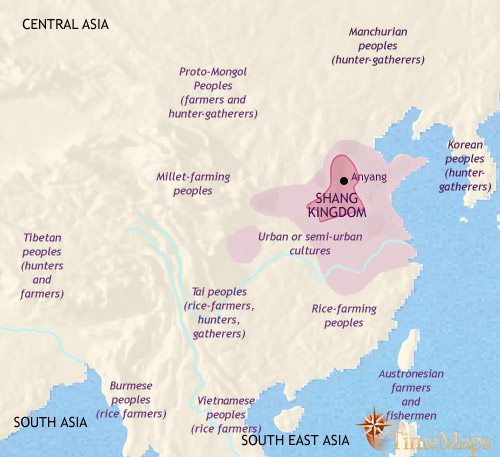
Ancient China: Civilization
<< back to history atlas: Maps of China
Overview of the history and civilization of Ancient China
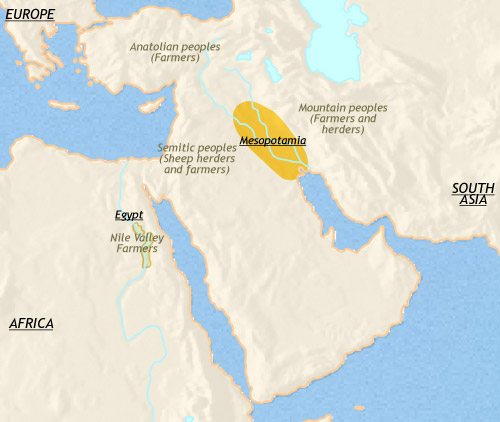
Ancient Mesopotamia: Civilization and Society
Ancient Mesopotamia saw the rise of the first civilization in world history. All later Western civilizations were built on the foundations laid down here
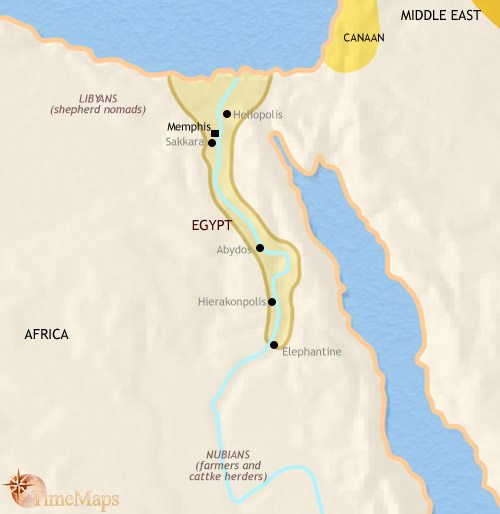
Ancient Egypt: Civilization and Society
<< back to Atlas of World History: Ancient Egypt Maps
Ancient Egypt was one of the earliest, longest-lasting and most influential civilizations in world history
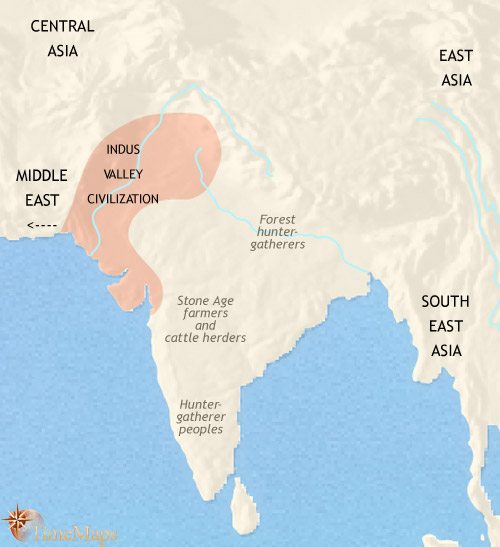
Ancient India: Civilization and Society
The history and civilization of Ancient India, including timeline and overview
Ancient Greek Civilization
<< back to TimeMap of World History: Ancient Greece Maps
The civilization of Ancient Greece was one of the most brilliant in world history
Early Modern Europe
Overview From the early 15th century, Medieval Europe began to morph into early modern Europe. In the later Middle Ages trade had expanded, towns had grown in number and size, and a new, more sophisticated society had emerged. In large parts of western Europe feudalism, with its fragmented power-structures, had begun to give way to […]
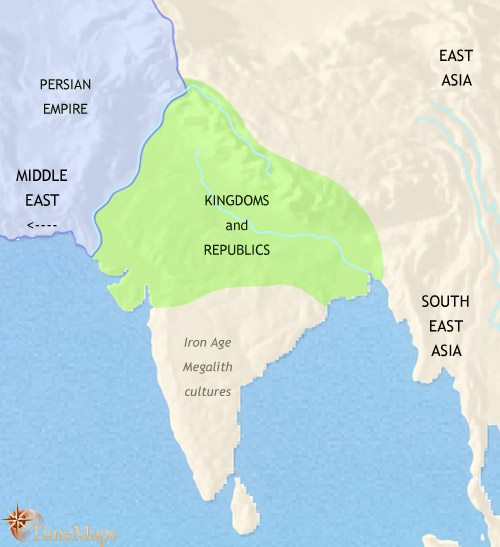
The Classical Era of Ancient India
<< Back to Ancient India overview
The Classical Age of Ancient India was the time and place in world history where three major religions – Classical Hinduism, Jainism and Buddhism – originated
Government and Warfare in Medieval China
Section 1: Bureaucracy The centuries between the end of the Han dynasty in 220 AD and the founding of the Sui dynasty in 589 AD saw China weak, divided, invaded and partially occupied by tribal peoples from beyond its borders. Nevertheless, throughout these chaotic and violent times, the tradition which four centuries of stable Han […]
The Late Babylonian Empire
Overview Babylonia was the name by which southern Mesopotamia had become known after the time of Hammurabi, the great king who had reigned in the eighteenth century BCE. It was he who had made ancient Babylon one of the greatest cities of Antiquity. The late Babylonian period, the subject of this article, falls in the […]
The Roman Empire: Government and Society
Timeline 31 BCE – the Battle of Actium leaves Octavian as the master of the Roman world 27 BCE – Augustus establishes himself as the first of the Roman emperors 6 CE – a Roman army is destroyed at the Battle of the Teutenborg Forest 14 – Tiberius succeeds Augustus as emperor, the first transmission […]
The Zhou Dynasty of Ancient China
<< back to the World History Atlas: Maps of Ancient China
The Zhou dynasty, the longest-lasting dynasty in Chinese history, endured from 1122 BCE to 256 BCE, and saw ancient China dramatically transformed
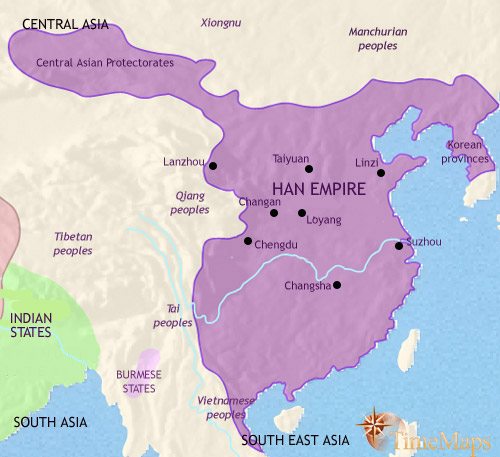
The Han Dynasty of Ancient China
The Han dynasty, one of the most important dynasties in all Chinese history, ruled Ancient China with only a brief break from 202 BCE to 221 CE, a period of more than 400 years.
Shang Dynasty China
<< back to history atlas: Maps of China
The Shang dynasty was the earliest dynasty in Ancient China for which there is direct historical evidence